Energy, Work and Power
-
Energy: Capacity of a system to do work. It is the stored amount.
-
Unit for Energy
-
-
Work: It is the transfer of energy via force over a distance.
-
Power: is the rate of Energy transfer
-
Unit for Power
-
Types of Systems
Systems are arrangement of elements that together exhibit a behaviour or function that the individual elements cannot accomplish by themselves. The three ways to analyse of think of systems are:
- Functional: Here the relationship between different functions and behaviours are considered. The components are treated like a black box: Example electricity is the input, resulting in heat and products.
- Structural: The system is described as a set of individual parts that are interconnected.
- Hierarchical: The system on the whole is defined as a Supersystem, constituting of many Subsystems.
Energy System
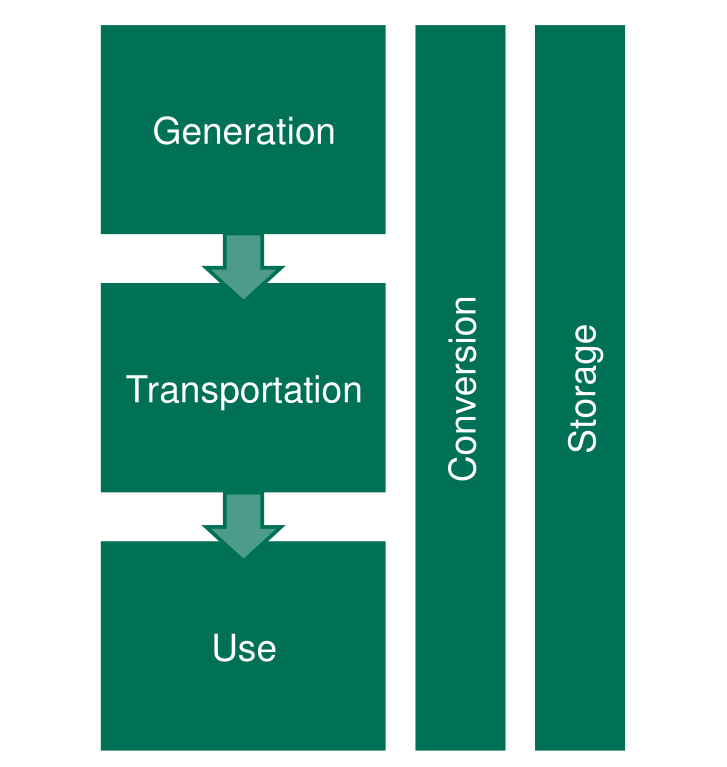 The energy system value chain consists of Generation, Transportation and Use.
Note: Conversion and Storage occur across the whole chain.
The energy system value chain consists of Generation, Transportation and Use.
Note: Conversion and Storage occur across the whole chain.
Generation of energy
It is the extraction or production of energy carriers from fossil, natural or renewable sources.
- Centralized systems: large power plants, central gas networks etc that is responsible for delivering power to a huge network of targets. Very common in for solid, liquid and gaseous energy carriers.
- Decentralized systems: several point sources that generate energy contributing to the energy grid allowing for bi-directional electricity flows.
Note
Centralized systems usually have import dependencies whereas decentralized systems are independent of global supply chains.
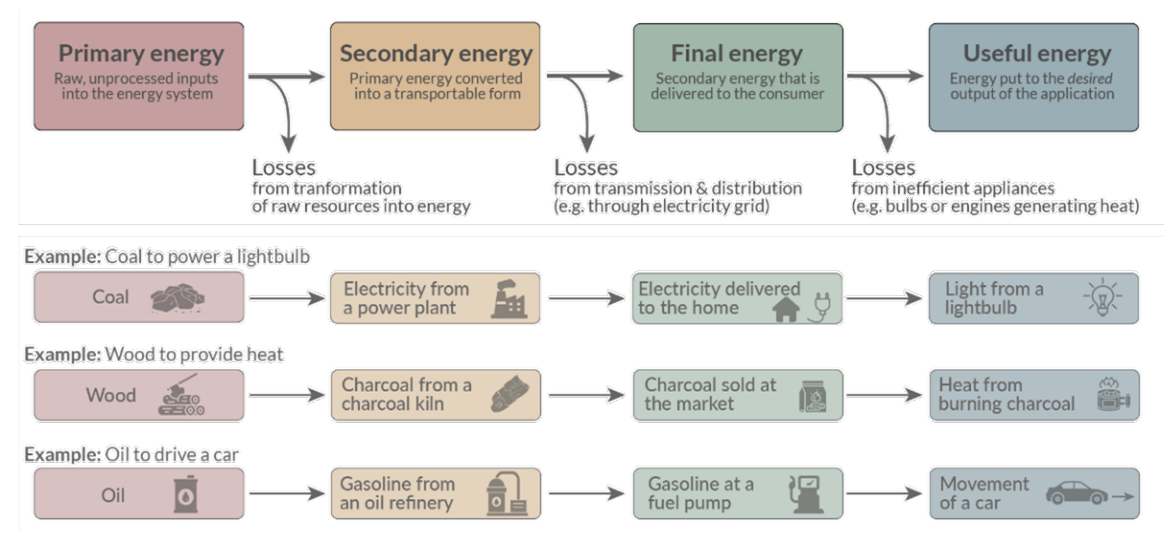
Energy Conversion Chain
Storage of Energy
-
The purpose of energy storage is to temporally decouple the energy generation with the energy demand. They enable:
- stability and reliability (against fluctuations, diverse sources)
- mobility
- energy cost optimization (off loading, arbitrage)
- resilience and back-up (natural disasters, supply chain disruptions)
-
Energy storage vs energy carrier: energy storage refers to the whole infrastructure that is responsible for charging, storing and discharging. An energy carrier is a substance (wind, coal, sun light etc) that can converted to obtain energy. Example: Fuel tank vs petrol, battery vs Lithium chemistry etc.
Usage of Energy
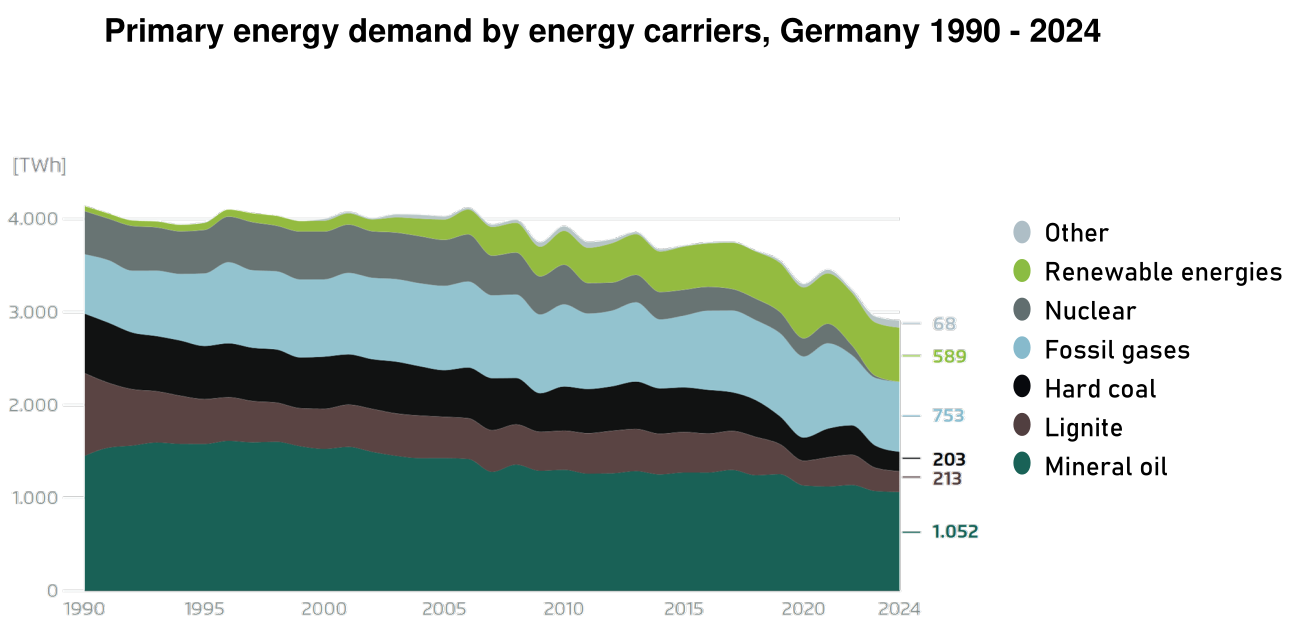
It is characterized by the metric Primary energy demand.