Cavitation
It is the formation of bubbles in a liquid at low pressure. In the xylem this occurs when the tension due to transpiration is so high that the dissolved air in the water expands either to fill the xylem vessels or the tracheids.
Embolism
It is the blocking of the xylem with an air bubble or cavity.
Tracheids and vessels
Both are channels that transport water in plants. Tracheids are narrow, single-celled conduits found in all vascular plants, they are the only conduit in gymnosperms. Vessels are wide, open-ended tubes stacked on top of each other, found in angiosperms.
Does cavitation always lead to embolism?
No, if the bubble is not big enough, the flow continues.
Is embolism always catastrophic for the plant?
No, if one vessel is blocked, others take over. If more vessels embolize, the conductance decreases, however the pressure difference between individual vessels remain the same. Hence, the velocity of flow remains the remains the same.
Note: pressure doesn’t redistribute once a vessel is embolized - it remains the same
Air Seeding
It is a phenomenon where the air bubble from an embolized vessel gets sucked through the pit into adjacent vessels given there is enough tension. It is a dominant cause for embolism;
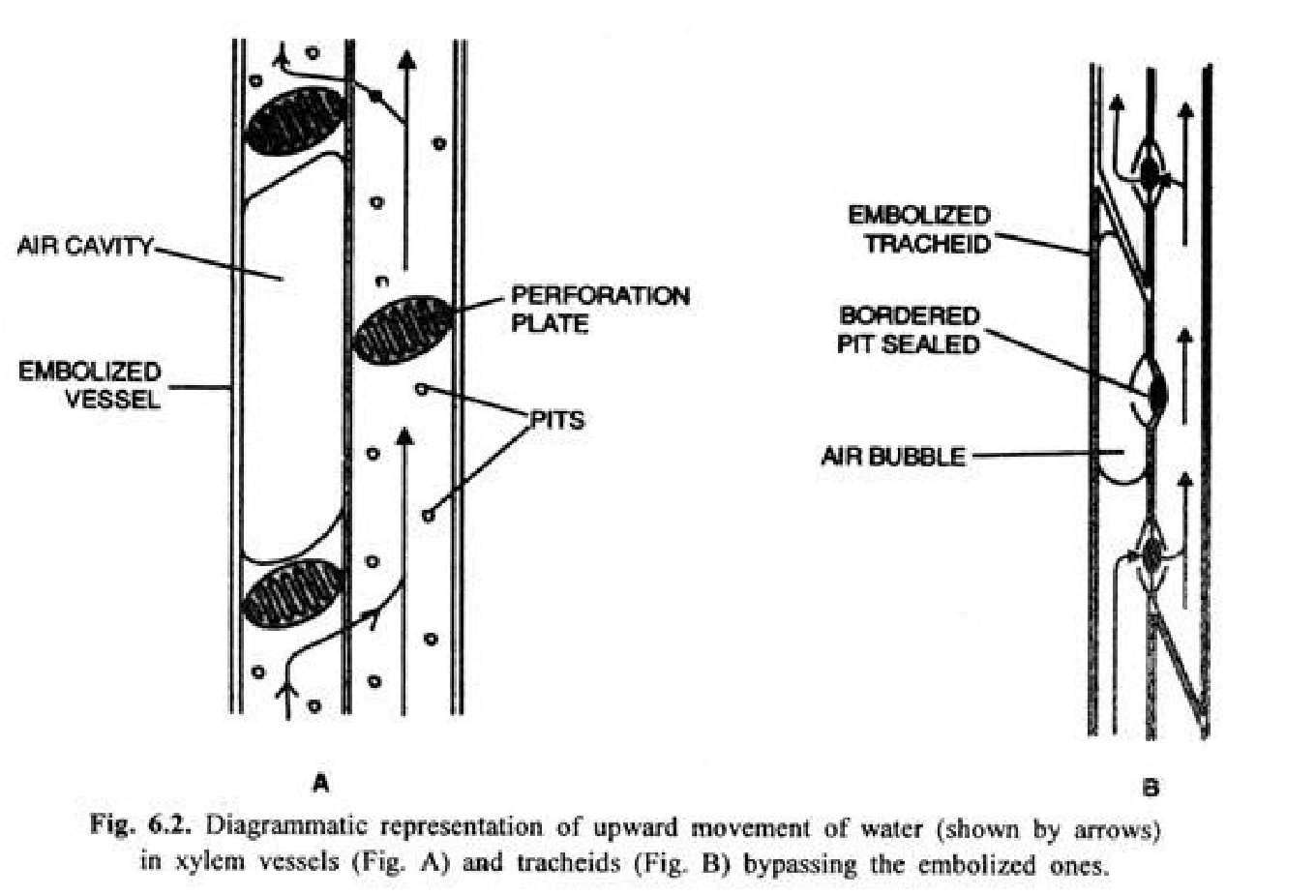
Perforation plates and Pits
They are the plants evolutionary response to air seeding. Perforation look like gutters and break bigger air bubbles into smaller ones that are less critical. Pits ensure redundancy in channel trasport by connecting adjacent channels. However the plant has to balance the size of the of the perforation plates and pits to not be too narrow hindering flow.
Xylem size and embolism risk
Larger xylem have more more conductivity and have space for larger bubbles. This puts the plant at higher risk of embolism. On the other hand smaller xylem are safer as they have less conductivity i.e, lesser space for bubbles.
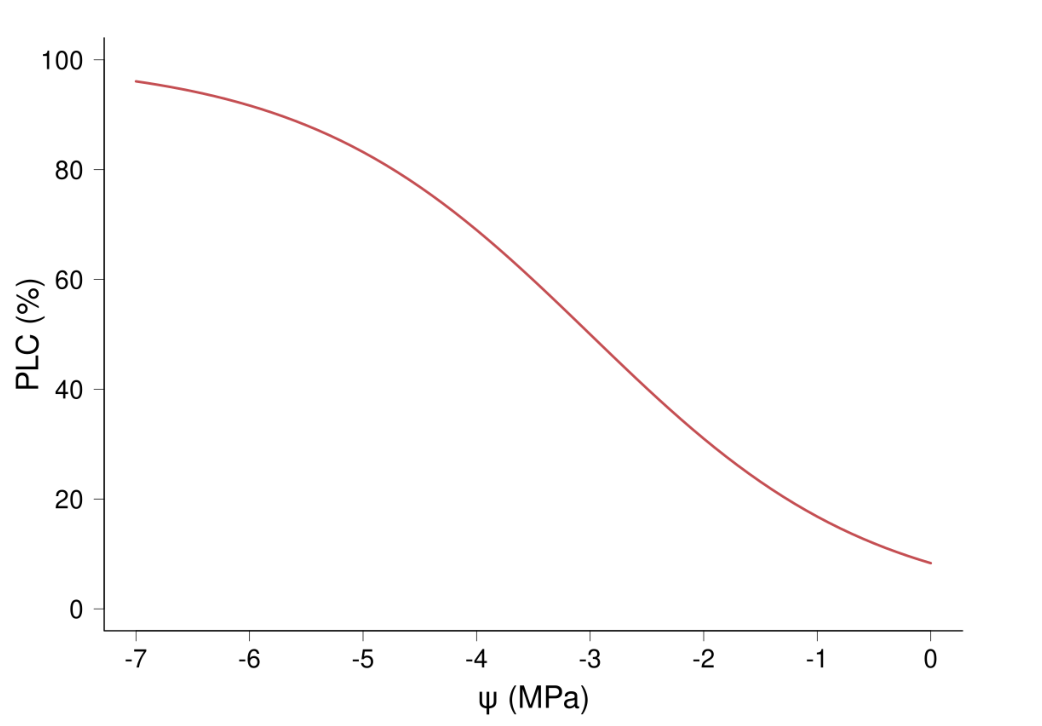
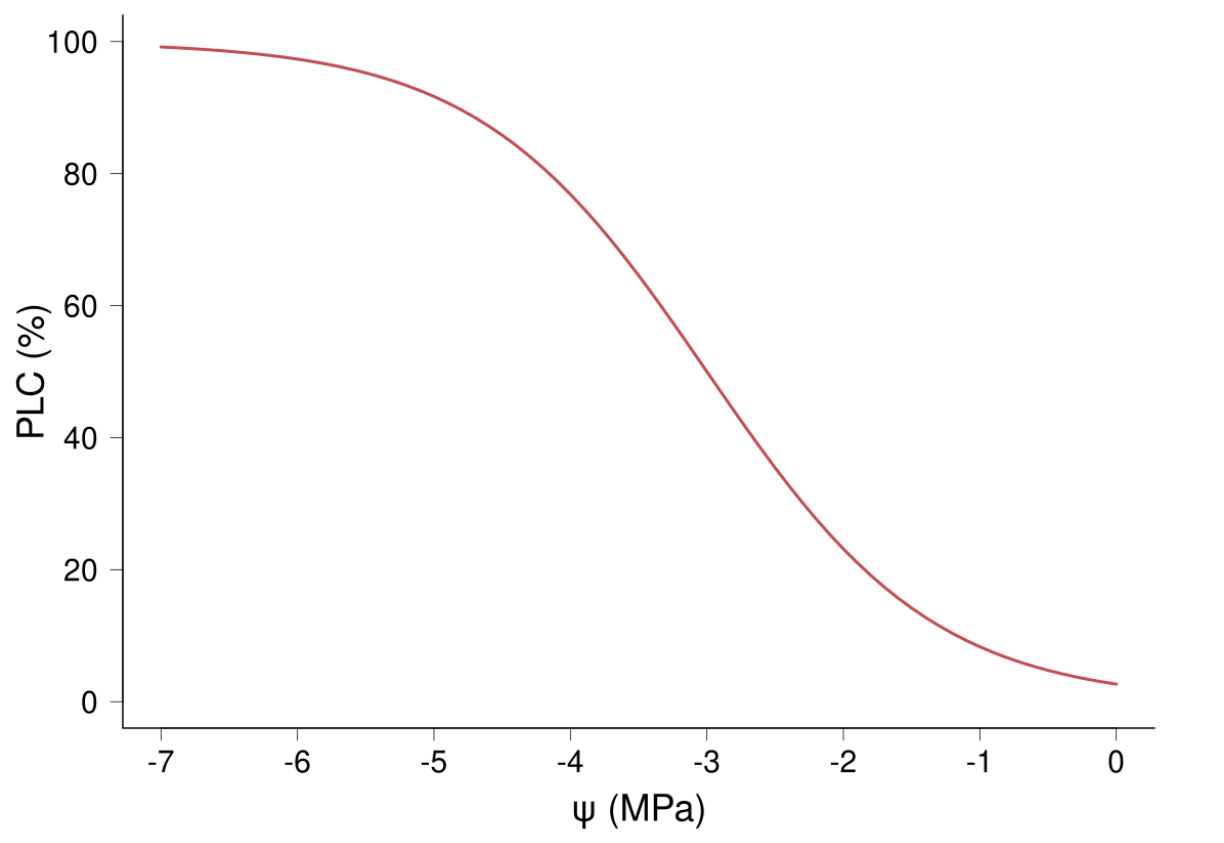
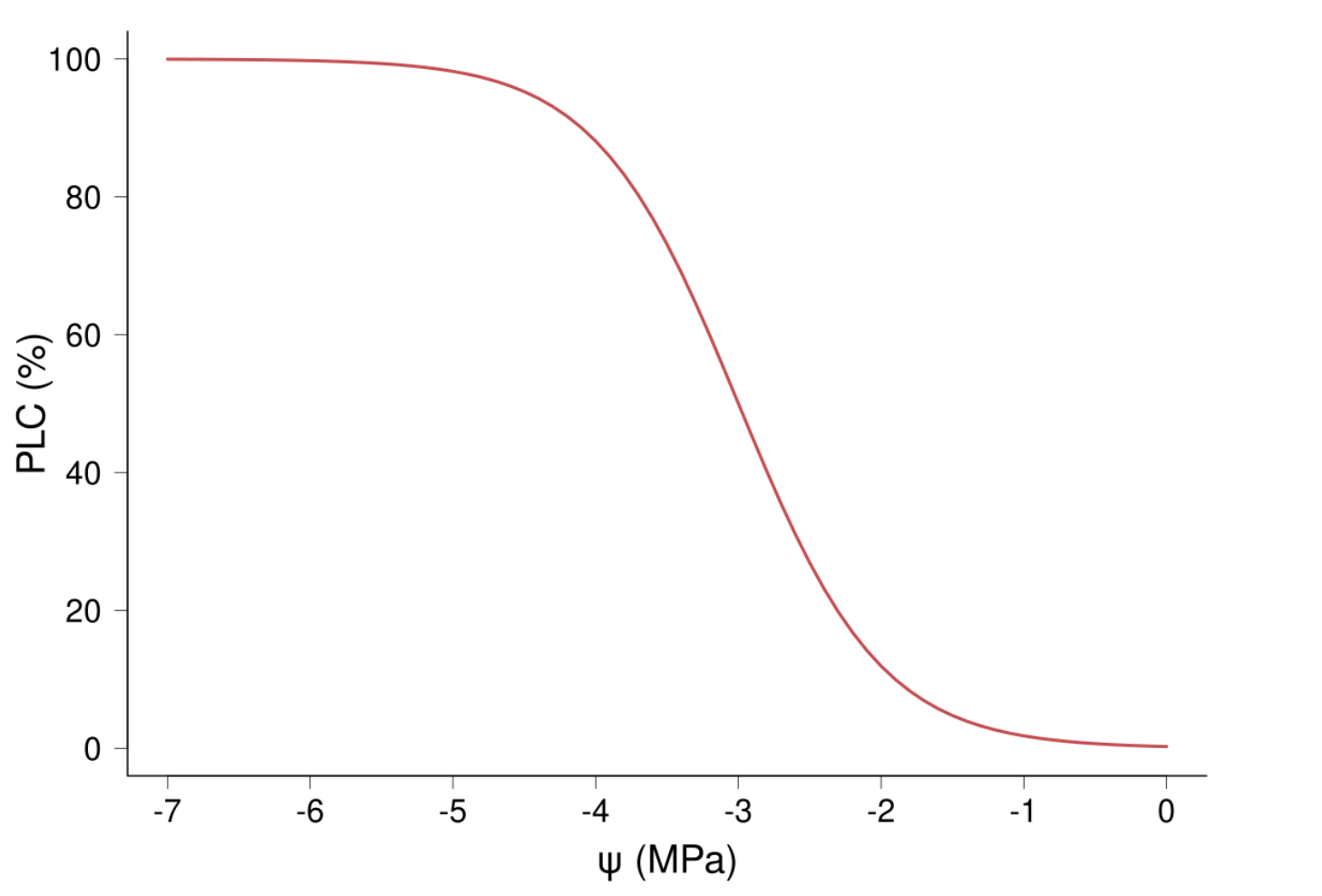
Vulnerability curves
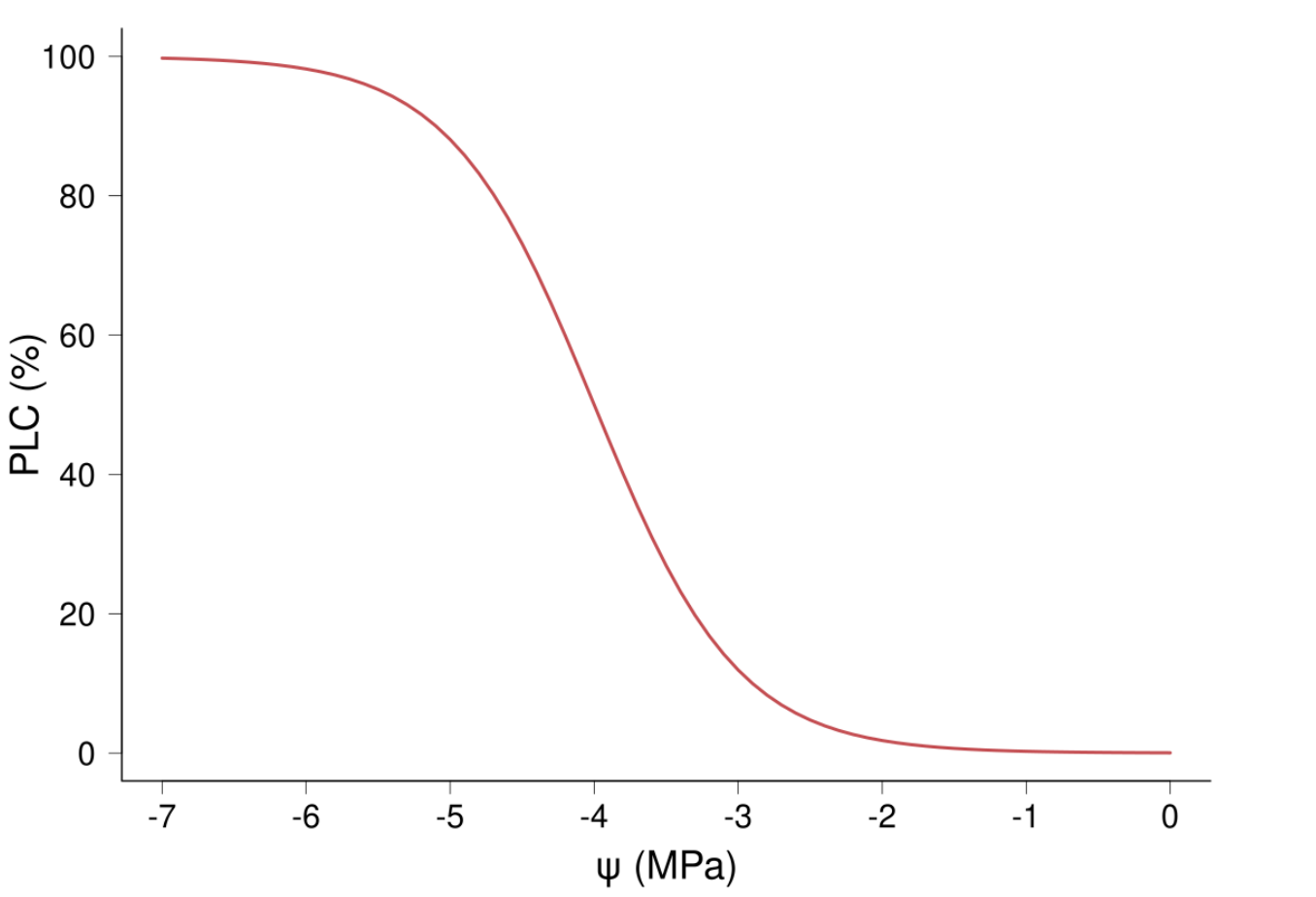
They describe percentage loss of conductivity (PLC) as a function of water potential.
Interpreting vulnerability curves
- = MPa & s = 20 %/MPa
- It displays a gradual failure
- It under-performs in normal conditions but continues to operate into severe drought conditions
- = MPa & s = 30 %/MPa
- Reach failure faster
- However performs better than the previous plant under normal conditions
- = MPa & s = 50 %/MPa
- More efficient in failure and in operation under normal condition
- = MPa & s = 50 %/MPa
- Drought resistant
- Operates with almost no loss in conductivity even into drought conditions
Sealed and unsealed Tilia Cordata
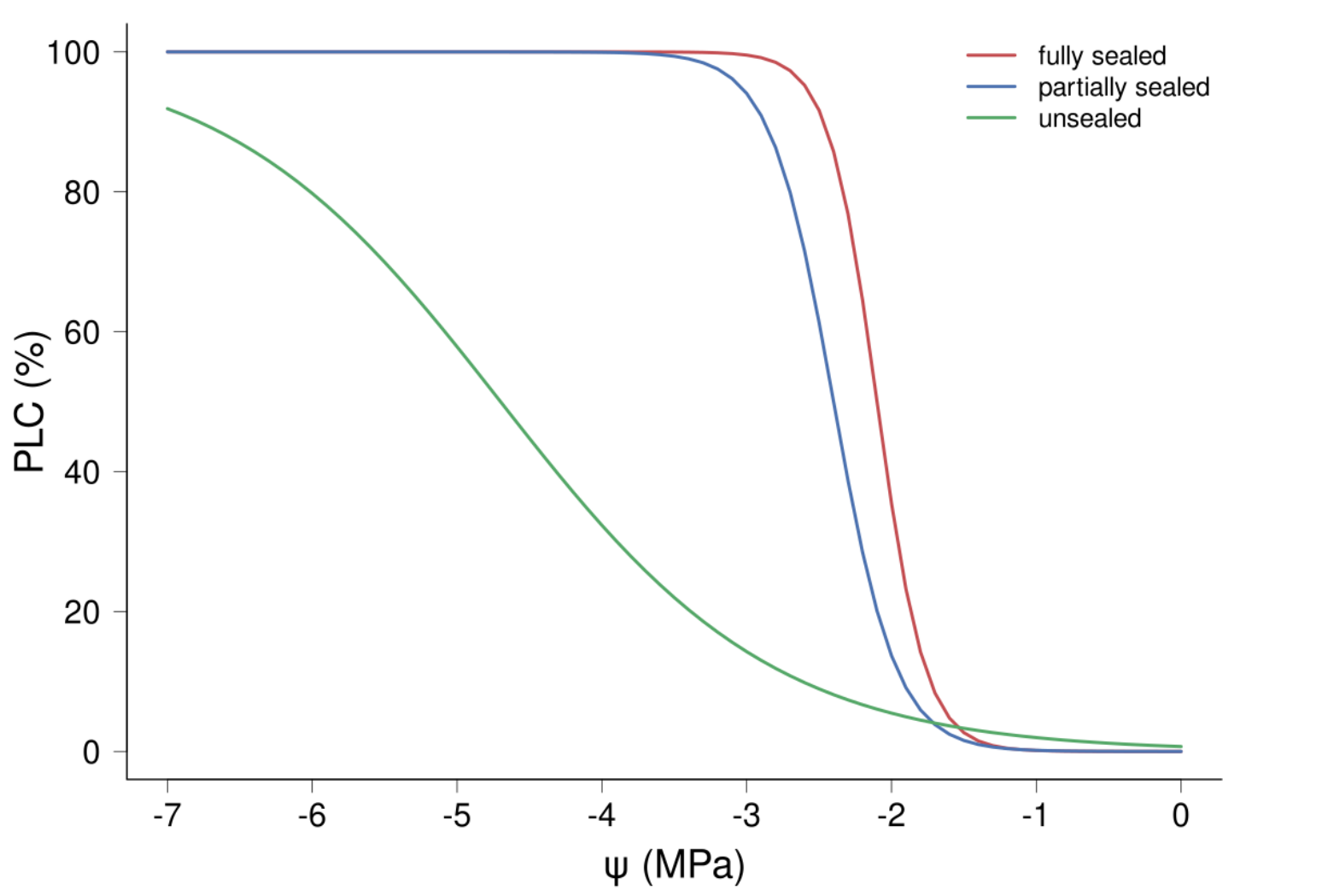
- Fully sealed trees are less adapted to draughts
- Modest dry spells can push the plant to failure
Hydraulic and Embolism recovery
- Root pressure: Root pump ions into the xylem causing an osmotic pressure difference. This leads to water flow into the xylem causing a pressure which squeezes the bubble to dissolve into the water. Seen in vines, grass and some angiosperms.
- New xylem growth: A new ring of xylem grows over the old ones and takes over the water transport. Seen in ring porous trees
What are the implications of embolism recovery on the plant hydraulic strategy?
Recovery permits a low safety margin Embolism is actually okay if the the recovery is common Species that don’t recover as often require a large safety margin