Anatomy
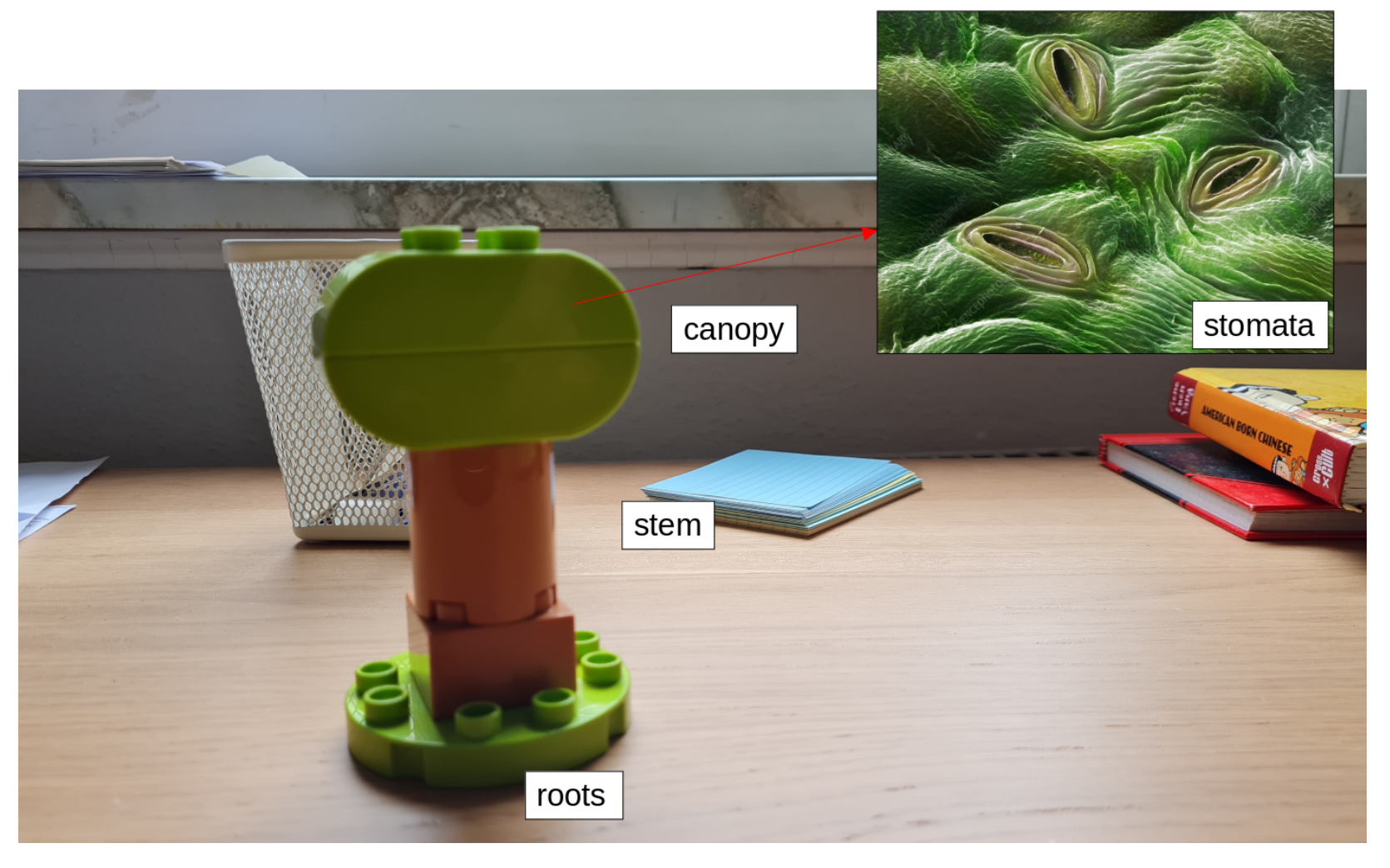
- Three distinct part of the plant
- canopy
- stem
- roots
- Stomata: Microscopic pores on the surface of the leaves (usually underside) that are the breathing apparatus of the plant. They regulate gas exchange (O2 and CO2) and transpiration.
- Vascular System of plants: It consists of three distinct tissues namely Xylem, Cambium and Phloem.
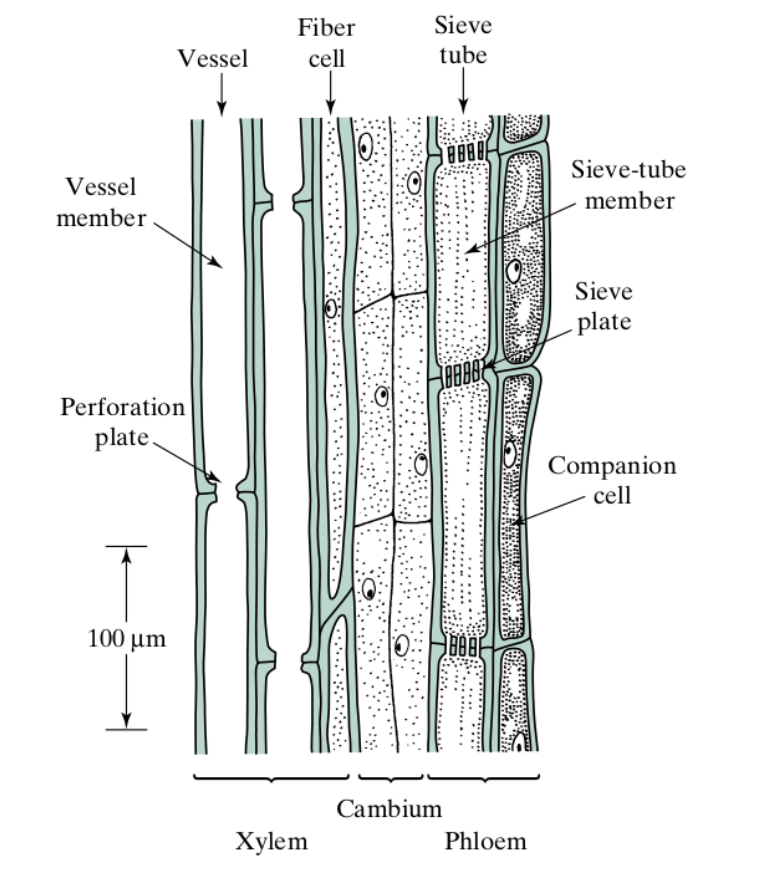
- Xylem (most relevant): moves water up from roots to leaves driven by evaporation pulling water upward (like sucking through a straw). These cells are dead and the flow is only in one direction.
- Cambium: ring of dividing cells that produce new Xylem and Phloem as plant grows thicker.
- Phloem: moves sugars around (source to sink. Flow can move bidirectionally).
Ecological traits
They are features in a particular species that indicate a function or the performance of that function which can be compared with other species. Example: size of the leaf, Stomata, rooting depth etc.
Water Potential
It is a measure of the potential energy of the water i.e, how “free” or “available” the water is to move.
- Pressure potentials It is the existing pressure inside cells.
- ve pressure: pressure is positive, water entering the cells gets pushed out into the rigid walls keeping the plant firm. Otherwise the plant will wilt.
- ve pressure: tension in the xylem. Transpiration causes a suction effect inside the xylem.
- Osmotic potential adding solutes in the a water lowers its potential
- Gravitational potential potential due to gravity. Taller the plant, higher the potential the plant has to overcome for water transport.
NOTE
Water potential at atm is 0 MPa by convection. So in the plant everything is negative
Flow Velocity
The flow velocities in the xylem can be estimated by the Hagen-Poiseuille equation.
where,
- Water potential
- Hydraulic conductance
NOTE
The Hagen-Poiseuille idealisation assumes smooth cylindrical tubes. It ignores resistances from pits and end walls. However it captures the most essential point that velocity scales with the square of radius.